
Workplace Culture
Why Are Your Meetings Wasting Everyone's Time?
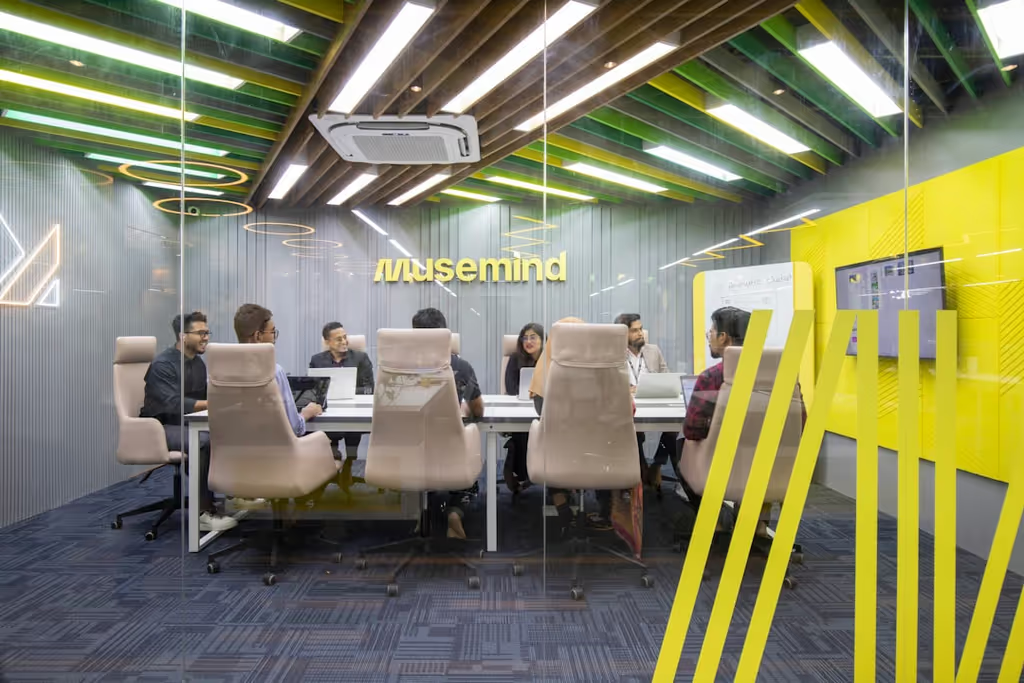
Since entering the workforce, whether from personal experience or complaints I've heard, ineffective meetings are probably the most common frustration. They've been around for years and still persist. You're busy, but meetings fragment your time. Getting interrupted when you're in flow is genuinely aggravating. Meetings often substitute for decisions, communication, and accountability. When goals are unclear, ownership is fuzzy, and no one prepared, everyone shows up looking busy — but nobody knows what they're there to do.
Three core pains of ineffective meetings
First, no clear purpose. Is this a decision meeting? A "direction discussion"? Or just an information sync? Most meetings mix all three and finish with nothing done. Second, the wrong people are in the room — key decision-makers absent, spectators abundant — so discussion goes in circles. Third, conclusions stay on the whiteboard and no one owns next steps. After the meeting, everyone interprets differently and diverge back at their desks.
To escape ineffective meetings, preparation is everything
No prep means a doomed meeting. An effective one does at least three things: solve only one thing (problem-solving, decision, or alignment), share a clear agenda and required materials beforehand, and confirm why each attendee must be there. Without those three, cancel the meeting and handle it via message or document.
What actually stops meetings from being pointless
You don't need org reform or fancy tools. Before every meeting ends, enforce three actions. First: what's the conclusion? The facilitator saying it once isn't enough — ask each key participant to state the conclusion in their own words to confirm shared understanding and kill misunderstandings on the spot. Second: what will I do? Each person states their next action publicly — a commitment that makes ownership explicit. Third: what do I need? People, resources, authority, cross-team help — if it's not stated, execution isn't planned. What can't be confirmed now gets a follow-up time locked in, not "we'll figure it out later."
Conclusion
Meetings won't disappear, but ineffective ones can. Less "let's see," more "who owns this." Less "what does everyone think," more "we've decided." Less "later," more "confirm now." High-performing teams aren't the ones who talk the most — they're the ones with the clearest direction. Before your next meeting ends, do those three actions. You'll find you suddenly have more time.